Author: battlebornpest

  • Tree Problems in Northern Nevada: Four Jobs, Four Different Causes

    Tree Problems in Northern Nevada: Four Jobs, Four Different Causes

    When a tree starts thinning out, losing leaves or developing dead branches, the first question is usually, “What does it need?” Our recent tree-care jobs across Northern Nevada show why the answer starts with finding the cause.

    During 2026, our team worked on a maple with girdling roots in Gardnerville, leafroller problems in Sparks, a flowering pear with fire blight in Reno, and a red oak treated for boring insects in Fernley. Each job called for a different response. Here is what those examples can tell you about a struggling tree on your property.

    Gardnerville: the problem was at the base of the maple

    On a May visit in Gardnerville, we exposed the root flare of a struggling maple—the area where the trunk widens into the main roots. We found girdling roots and removed the roots identified as causing the problem.
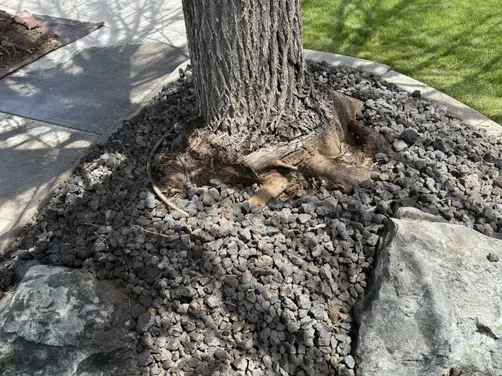
    Exposed root flare and roots at the base of a maple during a Gardnerville tree-care job
    Root-flare work on a Gardnerville maple, May 2026. Photo from our actual job.

    Girdling roots grow around or against the trunk and can compress it as they enlarge. A tree may show poor growth or branch decline even though the underlying issue is down at ground level. The University of Minnesota’s maple diagnostic guide identifies girdling roots as one possible cause of these symptoms.

    The practical lesson: include the trunk base and root area in the inspection. Root removal needs an assessment of the individual tree; cutting a visible root without understanding its role can create another problem.

    Sparks: leafrollers on a silver maple and roses

    In May, our team treated a silver maple and rose bushes at a Sparks property for leafrollers. The client had noticed damage to the foliage on both the trees and roses.
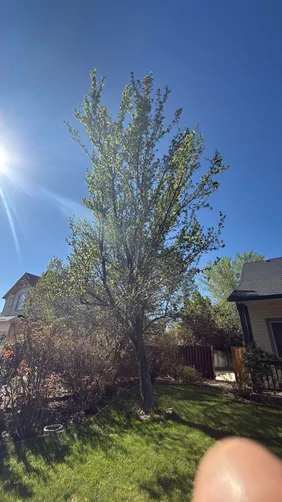
    Backyard tree photographed during a leafroller treatment visit in Sparks
    A tree at the Sparks property where we treated leafrollers in May 2026.

    Leafrollers are moth caterpillars that feed on foliage and use silk to fold or tie leaves together. According to UC Integrated Pest Management, the amount of damage and the caterpillars’ stage of development matter when deciding whether and when treatment is useful.

    Chewed leaves tell us something has been feeding. Looking for the insect and fresh activity helps determine what should happen next. Old damage alone does not tell us whether a treatment is needed today.

    Reno: fire blight on a flowering pear

    Our November work in Reno included treating a flowering pear for fire blight. The client’s account describes a diagnosis followed by a return visit after diseased portions had been cut out.

    Fire blight is a bacterial disease that affects pears, apples and related plants. UNR Extension’s fire blight guide describes scorched-looking shoots and wilted, hooked tips among its signs. A disease problem calls for its own assessment and management plan, including the extent of affected growth.

    If part of a pear suddenly looks scorched, take photos and arrange an inspection. Those symptoms are a reason to investigate before choosing a treatment.

    Fernley: boring insects in a backyard red oak

    In June, we treated a backyard red oak in Fernley for boring insects. This job adds another reason to look beyond the leaves when assessing tree problems in Northern Nevada.
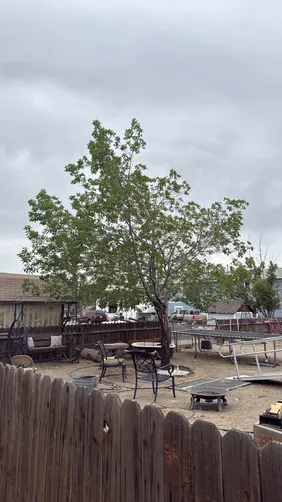
    Backyard red oak photographed during a tree-care visit in Fernley
    The Fernley red oak treated for boring insects in June 2026.

    The treatment target on this visit was boring insects. For a different tree, the next step still begins with identifying the tree, inspecting the affected areas and determining what is active. The fact that two trees look thin does not establish that they have the same problem.

    Start with an assessment of your tree

    These jobs show the range of concerns our local team encounters. Roots, leaf-feeding insects and bacterial disease require different decisions. Our Reno manager, ISA Certified Arborist Matt Gleason, brings that diagnostic approach to our tree-care work.

    Before your visit, note when the problem appeared and take a photo of the whole tree, plus close-ups of affected leaves, branches and the trunk base. Tell us about recent changes to watering, landscaping or nearby construction.

    Explore our Reno and Sparks tree-care guide or browse more of our recent local work. If you are concerned about a tree, request a tree assessment or call us at 775-345-5327.
  • Ants in Your Reno Home or Yard: What to Check First

    Ants in Your Reno Home or Yard: What to Check First

    ← Reno & Sparks Blog

    Ants in Your Reno Home or Yard: What to Check First

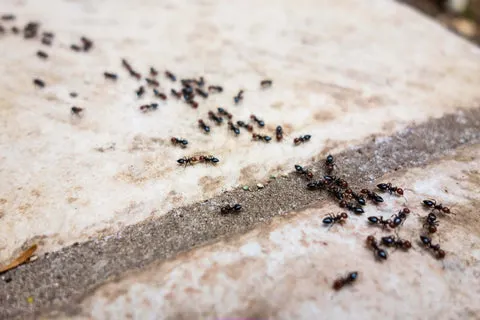
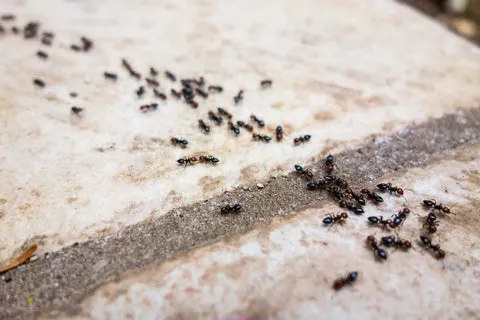
    Ants moving across a paved surface
    Identify the ant and trace its activity before choosing a treatment.

    Ants on a kitchen counter and ants nesting in a yard can call for different responses. For Reno and Sparks property owners, the useful first step is to identify the ant and understand where the activity starts. A spray aimed only at the visible trail may miss the reason ants keep returning.

    The University of Nevada, Reno Extension publishes guides specifically for Northern Nevada homeowners. Here is how that local guidance can help you decide what to check before requesting service.

    Start with the trail, food and moisture

    UNR Extension recommends identifying house ants before choosing a control method. Follow their movement to locate an entry point or nest, and note where activity appears. Reducing moisture, sealing cracks and keeping vegetation from touching the house can make access less favorable. Vacuuming visible ants and washing their trail with soap and water helps remove the scent trail.

    Bait works differently from a contact spray: foraging ants carry it back to the nest. That process takes time, sometimes days to weeks. Choose a product labeled for the identified pest and follow its directions. Read the local UNR Extension house ant guide for more detail.

    Carpenter ants deserve a closer look

    Carpenter ants excavate wood for nesting; they do not eat it like termites. UNR Extension notes that they can damage compromised wood in buildings. Finding the nest and addressing damaged wood matter more than repeatedly treating wandering workers. Keep firewood away from structures and watch for branches that provide access to the house.

    If you suspect activity in a wall, roof area or damaged wood, request an inspection instead of guessing at the nest location. Learn more in the Northern Nevada carpenter ant guide.

    Does a yard nest need treatment?

    Not every outdoor colony needs to be eliminated. UNR Extension recommends leaving harvester ant nests alone when practical because these ants can benefit the surrounding environment. A nest beside a play area or another place frequently used by children and pets deserves closer attention because of the risk of stings. Identification and location should guide the decision.

    The Northern Nevada harvester ant guide explains what to look for and when management may be appropriate.

    What a useful ant-control plan should explain

    Integrated pest management combines identification, monitoring, prevention and appropriate control methods. It also includes checking the results. UNR Extension describes this approach in its Integrated Pest Management program.

    When discussing service for your Reno home or business, ask:

    • What ant is causing the problem, and where is activity concentrated?
    • Which food, moisture or access conditions should be addressed?
    • What treatment is recommended, and what should we expect afterward?
    • What preparation, access restrictions or follow-up steps apply?

    Tell us about children, pets and the way each affected space is used. Treatment choices and re-entry instructions depend on the product label and the work being performed.

    Get help with ants in Reno and Sparks

    Battle Born Pest Control provides ant control for Reno and Sparks homes and businesses. Our Reno ant control page explains our approach and includes photos of ants to watch for around your property.

    Tell us where you are seeing activity and how long it has been happening. Contact us for a free estimate or call 775-345-5327.

    Request a Free Estimate   |   Call 775-345-5327